How AI Workflows Are Transforming Architecture, Engineering, and Construction
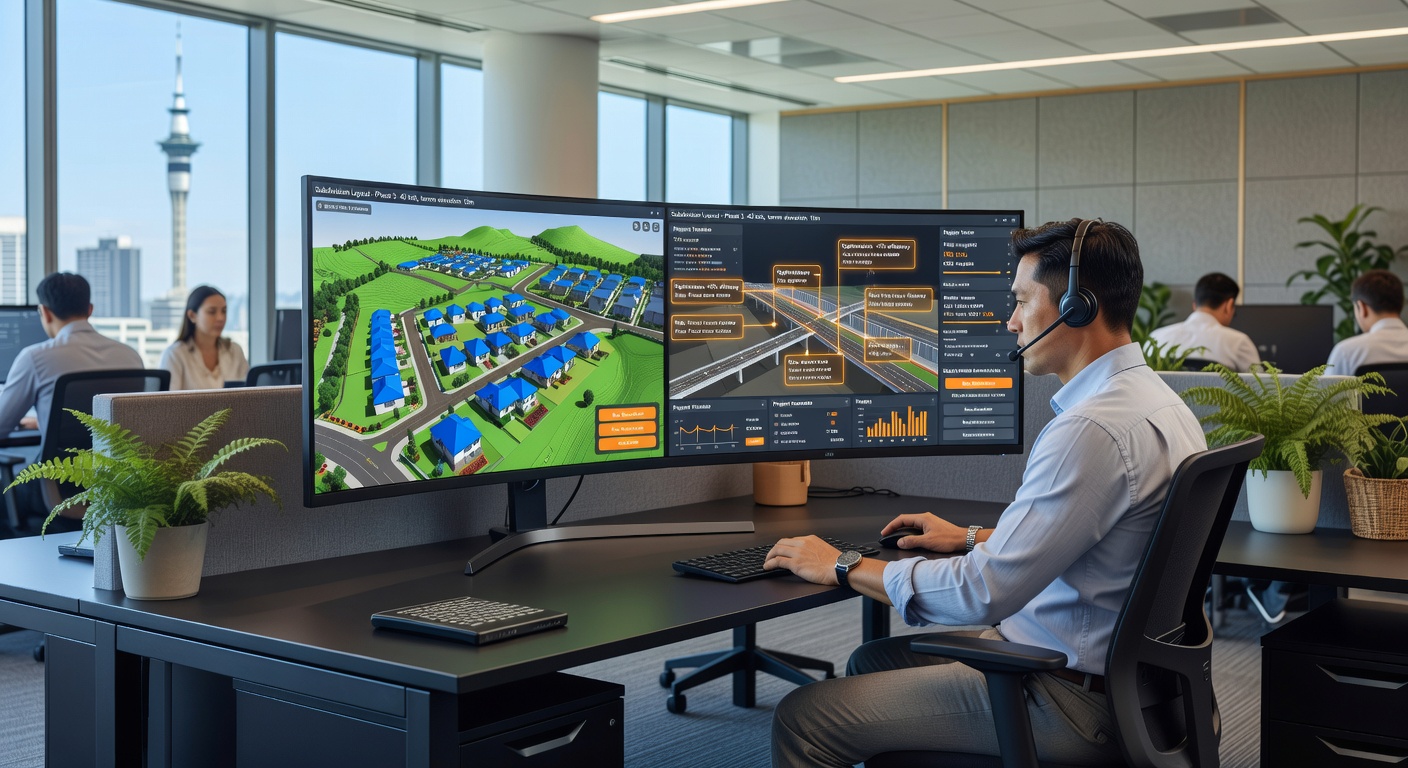
Artificial intelligence is no longer a distant horizon for the architecture, engineering, and construction (AEC) industry — it's actively reshaping how professionals work right now. From automated design generation to AI-assisted consent documentation, firms across New Zealand and around the world are discovering that embedding AI into day-to-day workflows isn't just a productivity boost; it's becoming a competitive necessity.
At Flowpath Engineering Consultants, we're watching this shift closely. Here's a grounded look at where AI is genuinely adding value in AEC professional services — and what to be mindful of as the technology matures.
What We Mean by AI Workflows
An AI workflow isn't simply using a chatbot to answer a question. It refers to the integration of AI tools into structured, repeatable professional processes — the kind that happen dozens of times a week in a busy engineering or architecture firm. Think automated report drafting, intelligent design checking, predictive project scheduling, or natural language querying of large datasets like council GIS layers or stormwater modelling outputs.
The distinction matters because isolated AI experiments rarely stick. The real transformation happens when AI is embedded into the tools and sequences your team already uses — not bolted on as an afterthought.
Design and Concept Development
Architects and engineers are leveraging generative AI tools to accelerate early-stage design. Platforms like Autodesk's AI-assisted features within Revit and Civil 3D, as well as standalone tools like Spacemaker (now part of Autodesk) or Hypar for parametric building generation, can rapidly produce and evaluate multiple design options against set constraints — site boundaries, floor area ratios, solar access, or infrastructure servicing requirements.
For land development engineers in Auckland, this has practical implications. Lot yield optimisation studies that once took days of manual iteration can now be generated and tested in hours, with AI flagging configurations that best satisfy both developer objectives and Auckland Unitary Plan requirements.
Documentation, Reporting, and Consenting
One of the most immediately impactful AI use cases in professional services is document drafting and review. Large language models (LLMs) — think tools built on GPT-4 and its successors — can be used to:
- Draft infrastructure reports and assessment sections based on structured engineering inputs
- Summarise lengthy council engineering standards or planning instruments
- Cross-check consent conditions against design drawings for compliance gaps
- Generate template-based stormwater management plans or geotechnical report sections
In the resource consent process, where repetitive but precise documentation is the norm, AI can reduce the time spent on boilerplate writing significantly — freeing engineers to focus on the actual technical judgement calls that require expertise.
A note of caution: AI-generated content requires careful review. LLMs can confidently produce plausible-sounding but technically incorrect statements. In a signed engineering report, that's a liability. AI is a drafting assistant, not a substitute for professional sign-off.
Construction Monitoring and Site Management
On-site, AI-powered tools are changing how construction monitoring and project management work. Computer vision systems can now analyse drone footage or site camera feeds to automatically track progress against programme, identify safety non-conformances, or flag discrepancies between as-built conditions and design drawings.
For civil engineering projects where construction monitoring is a condition of consent — as it commonly is for subdivision works in Auckland — AI tools that automate progress reporting from imagery are a genuine time-saver. They also create a more consistent and defensible audit trail.
AI-assisted scheduling tools are also gaining traction, using historical project data to predict delays, resource bottlenecks, and cost overruns before they materialise — giving project managers earlier intervention windows.
Hydraulic Modelling and Flood Risk Analysis
Hydraulic and hydrological modelling has long been computationally intensive. AI is beginning to assist in two meaningful ways: surrogate modelling (where AI models trained on simulation outputs can run rapid scenario testing at a fraction of the compute cost) and data interpretation (where AI tools help engineers interrogate large modelling datasets to identify key risk areas or sensitivity points).
For stormwater and flood risk work in Auckland — where Watercare, Auckland Council, and Tōpuni Catchment Management Plans all impose detailed requirements — tools that can accelerate scenario analysis without sacrificing rigour are genuinely valuable.
What Good AI Adoption Looks Like in an Engineering Firm
The AEC firms getting the most out of AI share a few common traits:
They start with workflow mapping. Before adopting any tool, they identify which repetitive, high-volume tasks are consuming time and eating into fee margins. Those are the highest-value targets for AI augmentation.
They maintain human oversight. AI outputs are treated as first drafts or decision-support inputs — not finished deliverables. Professional judgement remains at the centre of every output that carries an engineer's or architect's stamp.
They invest in data quality. AI tools are only as good as the data they're trained on or querying. Firms building structured, well-labelled project libraries and data repositories are positioning themselves well for deeper AI integration as tools mature.
They engage their teams. Resistance to AI often comes from uncertainty about job security or distrust of unfamiliar tools. Firms that involve their technical staff in trialling and selecting AI tools see much better adoption outcomes.
The New Zealand Context
New Zealand's AEC sector faces well-documented pressures: skills shortages, consent processing backlogs, rising construction costs, and the need to deliver more housing faster. AI won't solve all of those challenges — but thoughtfully integrated AI workflows can meaningfully improve the productivity of the professionals already in the system.
With Auckland's ongoing housing growth targets and the continued complexity of three waters infrastructure planning, there's a real opportunity for engineering firms to use AI to do more with the capacity they have — and to deliver better outcomes for clients in the process.
At Flowpath, we're committed to staying at the forefront of these developments. If you'd like to talk about how emerging technology is influencing infrastructure engineering and land development projects, get in touch with our team.