Why Lean, Focused Engineering Teams Deliver Better Outcomes for NZ Development Projects
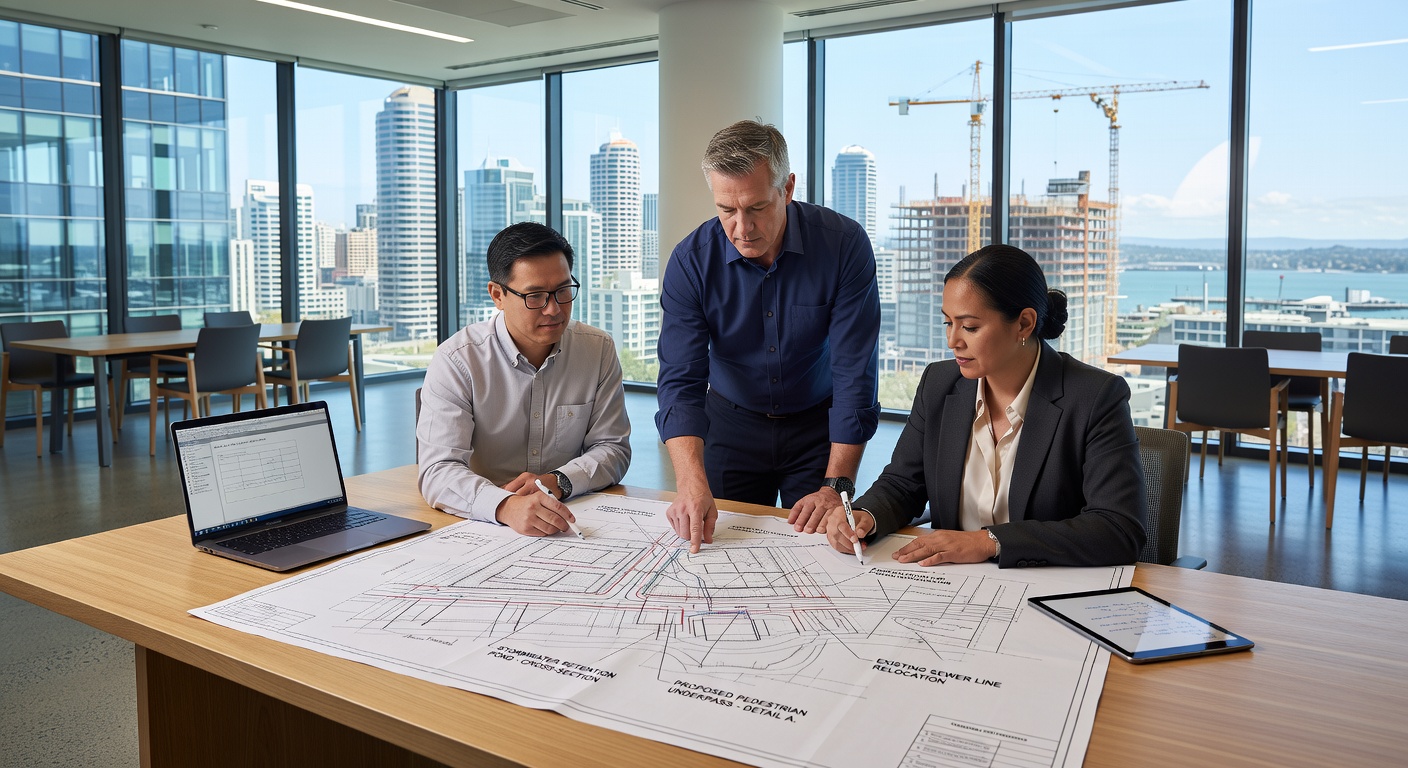
The New Zealand development sector has never been more demanding. Between tightening council timeframes, evolving infrastructure standards, complex resource consent requirements, and the ever-present pressure to keep project costs under control, developers and project managers are increasingly scrutinising the teams they bring on board. Bigger doesn't always mean better — and in 2026, a growing number of Auckland and wider NZ development projects are proving that lean, focused professional teams consistently deliver stronger outcomes.
What Do We Mean by a Lean Engineering Team?
A lean team isn't simply a small one. It's a team structured around skilled, senior-level practitioners who are directly involved in the delivery of your project — not layers of junior staff supervised at arm's length. In a lean consultancy model, the people you meet at the proposal stage are the people doing the work. There's no hand-off to a graduate buried three levels below the partner who won the job.
This model is common across high-performing boutique engineering firms in New Zealand and mirrors approaches that have long been standard in legal, financial, and architectural advisory services. The principle is straightforward: concentrated expertise, clear accountability, and direct communication.
Faster Decision-Making Means Faster Projects
One of the most tangible advantages a lean team brings to a development project is speed — specifically, the speed of decision-making. In larger organisations, a technical question often needs to travel up and down an internal hierarchy before a client gets an answer. In a focused team, the engineer who understands your project is the engineer you're talking to.
For land development projects in Auckland, where council processing timeframes are already stretched and every week of delay has a real holding cost, this responsiveness is not a luxury — it's a competitive advantage. Whether it's a stormwater design query, a retaining wall detail, or a last-minute change requested by Auckland Council during resource consent processing, lean teams can turn around answers and revisions quickly.
Stronger Technical Ownership and Quality Control
When senior engineers are hands-on throughout a project, the quality of technical output improves. Lean teams tend to have fewer handovers between staff, which means less risk of information being lost or misinterpreted as a project moves through its stages. The engineer who designed your three waters network is the same one reviewing the construction drawings — and ideally, the same one on-site during monitoring if needed.
This continuity of technical ownership is particularly valuable for complex civil engineering scopes such as hydraulic modelling, flood risk assessments, or integrated infrastructure design for multi-lot subdivisions. These are not tasks that benefit from fragmentation across a large team with varying levels of experience.
Cost Efficiency Without Compromising Expertise
There's a common assumption that larger firms offer better value because of their resources and systems. In reality, larger organisations carry significant overhead — office space, administration, business development, and management structures — all of which are reflected in their fee rates. A lean consultancy with low overhead can often offer senior-level expertise at rates that are genuinely competitive, without the client subsidising a corporate cost base they're not benefiting from.
For residential developers, small-to-medium commercial projects, and iwi or community-led developments across New Zealand, this cost efficiency can be the difference between a project being viable or not.
Deep Sector Focus Translates to Practical Know-How
Lean, specialist teams also tend to have a sharper focus on the sectors and project types they work in. Rather than spreading across every discipline and geography, a focused civil and land development engineering consultancy builds deep familiarity with local council requirements, standard conditions of consent, infrastructure design expectations, and the specific quirks of working in places like Auckland's geology-varied terrain or coastal environments.
This familiarity matters. Knowing how a particular Auckland Council planner tends to approach a consent condition, or which stormwater attenuation approach is likely to be accepted in a specific catchment, is the kind of practical knowledge that only comes from doing that work repeatedly — not from being a generalist across dozens of sectors.
Accountability Is Clearer
In a lean team, accountability is unambiguous. There's no question about who is responsible for a particular deliverable, who should be contacted when a problem arises, or where the decision-making authority sits. For clients — especially developers managing multiple consultants across a project — this clarity reduces friction and risk.
It also tends to produce better-motivated practitioners. Engineers who have direct visibility over the outcomes of their work, who see projects through from concept to construction, and who receive direct feedback from clients are typically more invested in quality than those operating as one cog in a very large machine.
The Right Fit for NZ's Development Landscape
New Zealand's development sector — and Auckland's in particular — is characterised by a high proportion of small-to-medium projects, tight urban infill conditions, and a regulatory environment that requires thoughtful, well-prepared technical submissions. These conditions suit lean, expert teams well.
As the industry continues to evolve, the firms that will consistently win on client outcomes are those that prioritise depth of expertise, direct engagement, and clear accountability over scale for its own sake. For developers, councils, and project managers navigating the demands of the 2026 New Zealand market, partnering with a lean and focused engineering consultancy is increasingly not just a viable option — it's often the smartest one.