
PC79: Auckland's Transport Plan Change and What It Means for Land Development and Subdivisions
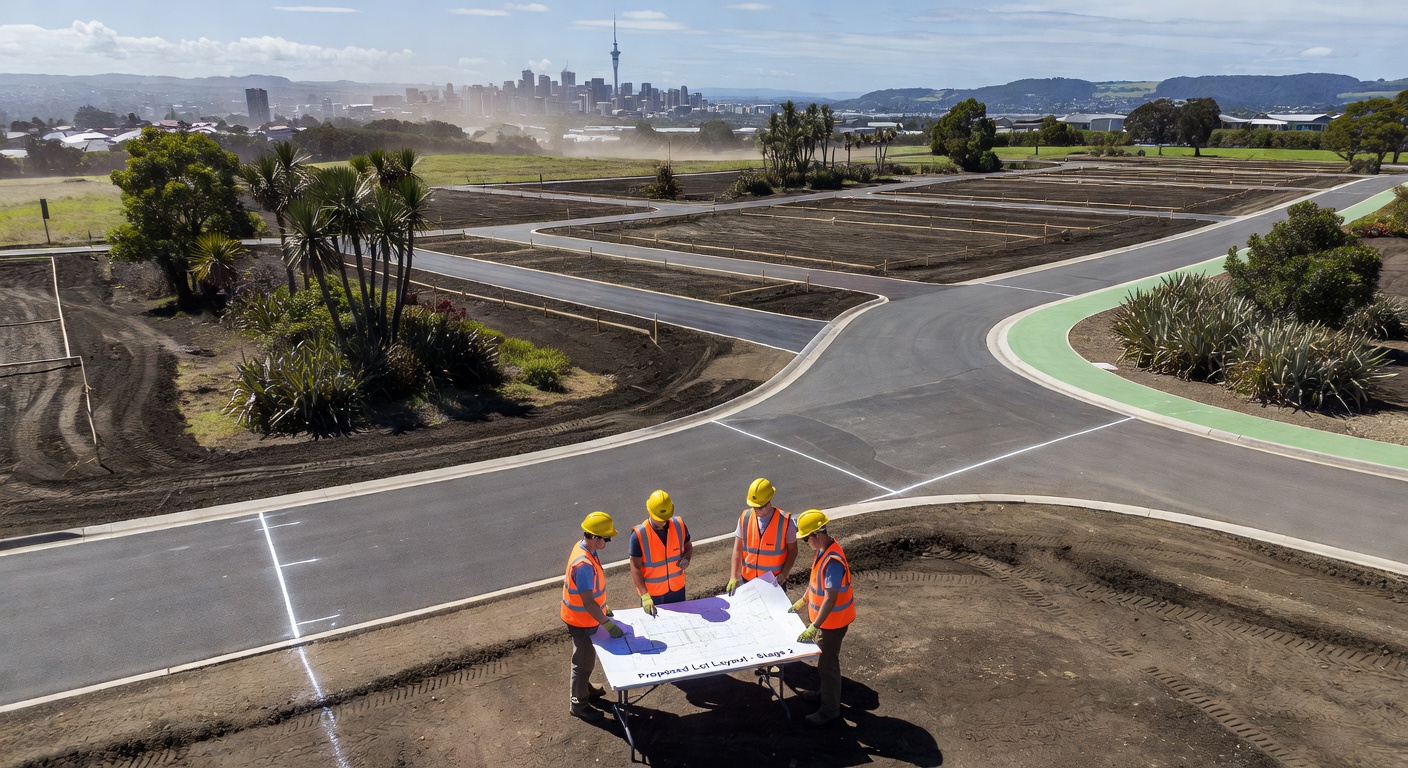
Auckland's planning landscape continues to evolve, and one of the more significant shifts affecting land developers, subdividers, and civil engineers right now is Proposed Plan Change 79 (PC79) to the Auckland Unitary Plan (AUP). If you're planning a subdivision, a residential development, or a commercial build in the Auckland region, understanding PC79 is no longer optional — it's essential.
What Is PC79?
PC79 is Auckland Council's proposed change to the transport-related provisions of the Auckland Unitary Plan. It represents a substantive overhaul of how transport effects are assessed, managed, and mitigated for land use and development activities across the region.
At its core, PC79 is designed to better align the AUP with the National Policy Statement on Urban Development (NPS-UD) and the Government Policy Statement on Land Transport, both of which push for more compact, well-connected urban environments. The plan change also reflects Auckland's broader strategic goals around reducing car dependency, improving active transport networks, and enabling higher-density development in areas well served by public transport.
The key areas PC79 addresses include:
- Removal or significant reduction of minimum parking requirements across much of the urban Auckland region, particularly within walkable catchments of rapid and frequent transit
- Updated thresholds and methodology for Transport Assessments (TAs) and Transport Impact Assessments (TIAs), changing when and how detailed transport reporting is required
- Revised vehicle access and loading standards affecting how developments interface with the road network
- New provisions for electric vehicle (EV) charging infrastructure and end-of-trip cycling facilities
- Strengthened active transport requirements, including improved pedestrian and cycle connectivity standards for new developments
The Parking Minimum Shake-Up
Perhaps the most talked-about element of PC79 is the removal of minimum parking requirements in areas with good public transport access. For developers, this is both an opportunity and a consideration that needs careful navigation.
On the upside, removing parking minimums frees up land that was previously committed to carparking. In urban and metropolitan zones particularly, this can meaningfully improve development yields — more dwellings per site, more flexible site layouts, and reduced construction costs where basement or structured parking was previously required.
However, removing the minimum does not remove the obligation to demonstrate that your development appropriately manages transport effects. Consent authorities — and potentially Watercare and Auckland Transport — will still scrutinise how traffic is generated, how access functions, and whether the development is adequately supported by the surrounding transport network. The onus has shifted from a prescriptive standard to a performance-based one, which puts more weight on the quality of your transport assessment.
What Changes for Subdivisions and Land Development?
For subdivision engineers and land developers, PC79 introduces several practical changes worth understanding before lodging your next resource consent.
Transport Assessment thresholds have been revised. The triggers for when a full Transport Impact Assessment is required versus a simpler Assessment of Transport Effects (ATE) have been updated. Depending on your development scale and location, you may find the reporting requirements have changed — sometimes reduced for smaller infill development, and more targeted for larger greenfield subdivisions.
Access and road network integration requirements remain robust. While parking rules have been liberalised, the requirements around vehicle crossings, sight distances, road hierarchy compliance, and pedestrian connectivity have in many areas been tightened or clarified. Subdivision layout must demonstrate genuine integration with the wider transport network, not just compliance with lot geometry.
Active transport provisions now carry more weight. New subdivisions and large-scale developments will increasingly need to demonstrate provision for walking and cycling — both within the development and connecting to the wider network. This has implications for roading design, reserve contributions, and the layout of street networks in greenfield areas.
EV and end-of-trip facilities. For commercial and mixed-use developments, PC79 brings in clearer expectations around EV charging infrastructure and end-of-trip facilities (secure cycle parking, changing facilities) for larger buildings. These provisions are worth factoring into your building consent drawings early.
How PC79 Interacts with the Wider Consenting Environment
PC79 doesn't exist in isolation. It sits alongside a range of other significant planning instruments that are reshaping how development is assessed in Auckland:
- The Medium Density Residential Standards (MDRS) have already opened up intensification across much of the urban area
- The NPS-UD continues to drive upzoning near city centres and rapid transit corridors
- Auckland Transport's Code of Practice and design standards remain the practical benchmark for infrastructure design
- Auckland Council's Development Contributions Policy continues to capture financial contributions for transport infrastructure
Getting the interaction between these layers right is where experienced engineering and planning advice makes a real difference to project outcomes.
Where Things Stand as of Early 2026
PC79 has progressed through notification, submission, and hearings phases. While some provisions have gained operative status or are treated as operative for certain consent purposes, other aspects remain subject to appeals or further decisions. This creates a slightly complex environment where the applicable rules can depend on the specific provisions at issue, the type of consent being sought, and how decision-makers are treating the plan change in practice.
For anyone lodging resource consents now, it's important to understand which version of the AUP transport provisions applies to your application — the pre-PC79 rules, the proposed PC79 rules, or a blend of both. Getting this wrong at the outset can lead to inadequate assessment reports, requests for further information, or even consent refusals.
Practical Implications for Your Next Project
If you're a developer, landowner, or project manager planning work in Auckland, here's what we'd recommend:
- Review how PC79 affects your specific zone and location. Transport provisions are not uniform across Auckland — your proximity to rapid transit, the nature of the zone, and the scale of development all affect which rules apply.
- Commission a Transport Assessment early. Whether you need a full TIA or a lighter-touch ATE, having this work done as part of your pre-application process means fewer surprises at lodgement.
- Revisit your parking strategy. If you've been designing in minimum parking that is no longer required, there may be an opportunity to re-optimise your layout and improve yield.
- Engage with Auckland Transport early on larger projects. For significant subdivisions or commercial developments, pre-application meetings with Auckland Transport remain invaluable.
How Flowpath Can Help
At Flowpath Engineering Consultants, we work across the full spectrum of land development and subdivision engineering in Auckland. We understand how changes like PC79 ripple through the consenting process — from transport assessments and road network design through to stormwater, wastewater, and civil infrastructure. Our team stays current with the evolving planning environment so that your project is designed to meet the rules that actually apply, not yesterday's standards.
Whether you're planning a small infill subdivision or a large-scale greenfield development, we're here to help you navigate the complexity and get your project moving.